
Operating in Conflict Zones: Israel as a Test of Resilience
Author/s
Anna Adamsky
anna@gk-ad.com | Attorney | GK Advisory | Tel Aviv, Israel
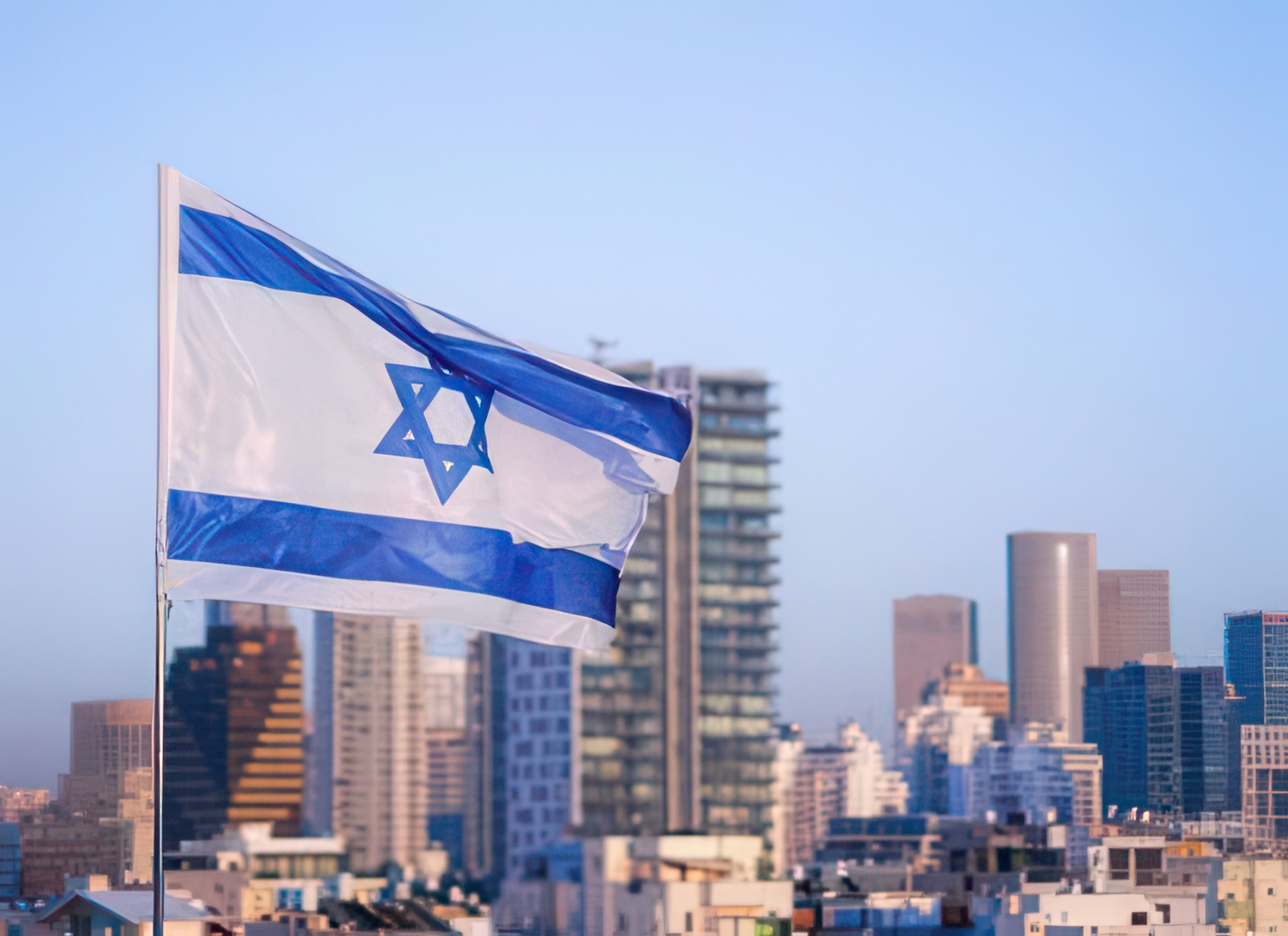
Israel today offers a useful case study in the difference between operating in a conflict zone and operating in a failed market. Foreign companies sometimes conflate the two. They see missile alerts, reserve mobilizations, regional escalation, political polarization and growing international scrutiny, and conclude that the business environment is fundamentally unmanageable. That is not the reality. Israel remains a highly functional, technologically advanced economy operating under sustained geopolitical stress. The more difficult question for a company considering entry or continued operations is not whether risk exists but which risks can be managed, which are structural, and whether the organization is genuinely prepared to operate through repeated disruption.
The resilience is real, but it should not be romanticized. Israel’s economy contracted at an annualized 3.8% in the first quarter of 2026, as the conflict with Iran reduced consumption, government spending, and exports. The Bank of Israel nevertheless expects approximately 4% growth for 2026, assuming the intensity of fighting declines and there is no renewed conflict with Iran. The IMF is more cautious, forecasting 3.5%. These figures capture the paradox: the economy can absorb extraordinary shocks, but the shocks have become sufficiently persistent to affect its underlying growth potential.
For a foreign company, the practical consequences are significant. Infrastructure and financial institutions continue to function, courts operate, and the technology ecosystem remains globally competitive. But companies must contend with reserve-duty absences, interruptions to air travel and logistics, higher security and insurance costs, cyber threats and reputational exposure. The strong shekel has added another pressure: in June, the government announced a NIS 1.6 billion support program for technology and export businesses affected by currency appreciation.
Skilled-worker migration is another emerging concern, with recent data indicating a sharp increase in the departure of highly educated Israelis.
The first major mistake foreign companies make is assuming that Israel’s sophistication means it can be managed like any other OECD market. A standard compliance program, business-continuity plan, and insurance package may satisfy formal requirements while leaving the organization unprepared for the operating reality. Conflict exposure here is not necessarily an exceptional event. It can become a recurring operating condition.
The second mistake is treating compliance as a substitute for resilience. Foreign companies understandably ask whether transactions are permissible, whether sanctions or export controls apply, or whether a particular counterparty presents a legal risk. Those questions are essential, but they are only part of the decision. A more useful question is: Can the business continue functioning if conditions deteriorate tomorrow? Can critical employees work remotely? Are decision-making authorities clear? Are suppliers and data centers sufficiently diversified? Can management travel? Can payroll, communications, and customer support continue if flights stop or employees are called up for reserve duty? In a conflict environment, resilience has to sit alongside compliance as a core governance function.
There is also a genuine opportunity that foreign companies may be underweighting. It is not simply “defense technology,” but the broader intersection of cybersecurity, AI security, deep technology, and resilient infrastructure. Israeli startups raised approximately $8.6 billion in the first five months of 2026, with much of the funding concentrated in cybersecurity and AI. More recently, Israel’s technology employment data showed a significant shift toward hardware, semiconductors, computing infrastructure, and defense technologies as software employment comes under pressure from AI and the strong shekel.
This is commercially important beyond Israel. Technologies developed to protect systems, authenticate people, detect fraud, secure AI agents, maintain communications, or preserve operational continuity under attack increasingly address problems faced by companies globally. The opportunity is therefore not that conflict creates attractive investments; it is that prolonged exposure to disruption has accelerated the development and testing of capabilities that other markets are now beginning to need.
Companies should also be clear about what good governance can and cannot achieve. Rigorous compliance can materially reduce sanctions and export-control exposure, third-party corruption risk, cyber vulnerabilities and supply-chain failures. It can establish escalation protocols, strengthen due diligence and create accountability.
But compliance cannot eliminate geopolitical risk. No policy can prevent a missile attack, guarantee uninterrupted air travel, control international political sentiment, or determine how employees, customers, investors, or regulators abroad will react to developments in Israel. These risks must be accepted, priced into the business model, transferred where possible, or avoided. They cannot simply be “complied away.”
The single most important practical step before entering or continuing operations is therefore an institutional readiness assessment conducted at board level — ideally through a realistic escalation simulation. Management should test what happens during the first 72 hours of a major security event: who decides whether operations continue, who communicates with employees and regulators, where critical functions relocate, which suppliers fail first, and what conditions trigger suspension or withdrawal.
Readiness is not having a policy on a shelf. It is knowing that the policy will work when the assumptions behind it no longer do.
Israel’s broader lesson is therefore not that conflict can be made safe. It is that serious companies can operate in high-risk environments when they distinguish between manageable and non-manageable risks, build resilience into the operating model, and enter with eyes open. The objective is not to eliminate uncertainty. It is to know which uncertainty the organization is prepared to absorb — and which it is not.
Selected Case Studies: Foreign Companies Operating in Israel During the Current Conflict Environment
These examples illustrate how sophisticated companies respond to different forms of conflict-related exposure. The pattern is not simply one of staying or leaving. It is differentiated risk management: companies reassess capital commitments, reroute supply chains, manage stakeholder pressure, temporarily reduce operations where necessary, and continue investing where the strategic rationale remains compelling.
Intel – Strategic Commitment Does Not Mean Unlimited Capital Commitment
Intel illustrates both the resilience and the limits of Israel’s proposition. In 2023, Intel announced a planned $25 billion expansion of its Kiryat Gat semiconductor manufacturing operations, supported by a substantial Israeli government incentive package. The project was presented as one of the largest private investments in Israel’s history.
The picture subsequently changed. In June 2024, Intel froze construction of the planned expansion as part of a broader review of its global manufacturing and capital plans. By 2026, the expansion remained under review, while Israel cancelled a NIS 1.3 billion grant allocated for 2025 because the investment milestones had not been met. Intel nevertheless continues to maintain a substantial Israeli presence, with approximately 9,300 employees. Intel’s retrenchment therefore needs to be understood alongside a much broader corporate restructuring: in 2025, the company announced plans to reduce its global workforce by 15% as part of a strategy to become more cost-disciplined and to build manufacturing capacity only where customer demand justified it. A company can regard a market as strategically important while simultaneously delaying major fixed investment because of financial constraints, market conditions, and geopolitical uncertainty.
Google Cloud and Amazon Web Services – Commercial Commitment Meets Stakeholder Risk
Project Nimbus, the Israeli government’s large-scale cloud program, provides a different example. Google and AWS remain the selected public-cloud providers under the program, which is designed to modernize government computing infrastructure.
Yet the commercial relationship has generated a risk profile extending well beyond conventional compliance. Google terminated employees following protests against the contract in 2024, while subsequent reporting raised questions about the relationship between commercial cloud and AI services and Israeli defense users.
The important lesson is that a legally permissible government contract can still create substantial employee-relations, reputational, human-rights, and governance exposure. Multinationals operating in politically contested markets need a framework for managing stakeholder disagreement, not merely a legal opinion confirming that the contract is permissible.
Maersk – Operational Adaptation Rather Than Withdrawal
Maersk provides one of the clearest examples of conflict becoming an operational and supply-chain management issue rather than an automatic reason to exit.
Regional attacks and security disruptions have repeatedly affected Red Sea shipping. In 2026, Maersk adjusted its Israel service patterns in response to operational conditions, including temporarily replacing an Ashdod call with Haifa and introducing additional cargo-related costs. It subsequently continued to operate services connecting Israel with other Mediterranean markets. These adjustments illustrate the more common corporate response to disruption: reroute, reprice, add redundancy and reassess rather than automatically withdraw.
The lesson is highly practical: sophisticated operators do not necessarily seek to eliminate geopolitical exposure. They redesign their networks around it. For companies dependent on imports, manufacturing inputs, or regional distribution, resilience may therefore be less about maintaining the original operating model than about having enough alternatives to change it quickly.
NVIDIA – Strategic Technology Can Outweigh Geopolitical Volatility
NVIDIA’s relationship with Israel illustrates the continuing strategic value of the country’s technology ecosystem. In 2024, NVIDIA completed its approximately $700 million acquisition of Israeli AI infrastructure company Run:ai after regulatory scrutiny.
The story did not end there. NVIDIA has continued to expand its Israeli footprint. In 2025, Reuters reported that the company was seeking land for a major new campus near its existing northern Israel operations, potentially involving thousands of employees. The company had already grown substantially in Israel following its acquisition of Mellanox and had approximately 5,000 employees there at the time of the report. The significance is not that NVIDIA considers Israel risk-free. It is that, in AI and advanced computing, the strategic value of specialized talent and intellectual property can outweigh the costs associated with geopolitical volatility. The relevant calculation is therefore not simply “Is the market risky?” but “Is the capability available in this market strategically difficult to replace?”
Energean – When Security Risk Forces a Temporary Reduction in Operations
Energean provides an important counterweight to the other examples. The London-listed energy company operates significant natural-gas assets in Israel, but in 2026 its Israeli operations were directly affected by the regional conflict.
In late February 2026, Israel’s Ministry of Energy ordered a temporary shutdown of gas production as a security measure. Energean’s Israeli operations remained suspended for 41 days before production resumed on April 9, 2026, with output returning to full capacity within 48 hours. The disruption nevertheless had a measurable financial consequence: in May 2026, Energean cut its 2026 production forecast from 140,000–150,000 barrels of oil equivalent per day to 130,000–140,000, while reducing its Israeli production forecast from 108,000–114,000 to 98,000–104,000 barrels of oil equivalent per day. First-quarter production fell 21% year on year and net profit declined 65%.
The lesson is that resilience sometimes means stopping safely and restarting quickly, rather than maintaining operations at all costs. A credible business-continuity plan must therefore define not only how to continue operating during disruption but also the thresholds at which operations should be paused.
Broader Pattern
Taken together, these cases point to a more useful framework for foreign companies considering Israel.
First, strategic commitment and capital commitment are not the same thing. Intel demonstrates that even a strategically important operation may see major expansion delayed.
Second, operational resilience is often more important than physical withdrawal. Maersk demonstrates how supply chains can be redesigned around disruption.
Third, commercial risk increasingly includes stakeholder and reputational risk. Project Nimbus demonstrates that legal permissibility does not resolve questions raised by employees, customers, investors or civil society.
Fourth, strategic technology can justify continued exposure. NVIDIA’s continuing investment demonstrates that companies may accept geopolitical volatility when the underlying talent, technology and intellectual property are considered difficult to replicate elsewhere.
Finally, resilience sometimes requires temporary retrenchment. Energean demonstrates that reducing or suspending activity can be the correct risk-management decision without implying that a company has abandoned the market.
The broader pattern is therefore not that foreign companies either “stay” or “leave.” The more accurate description is differentiated exposure. Companies with strong governance, contingency planning, diversified operations, and a compelling strategic rationale can maintain or expand their Israeli operations despite the conflict. Others may freeze investment, reroute activity, or temporarily reduce exposure when security conditions or the risk-adjusted commercial case require it.